Sell Your Electrical Business in Pennsylvania, 76+ Active PE Buyers, $0 Seller Fees
Quick Answer
Pennsylvania electrical contracting businesses typically sell for 4.5x to 6.5x SDE, with valuations higher for commercial/industrial segments serving the state’s manufacturing legacy, Marcellus Shale operations, and healthcare anchors like UPMC and Geisinger, and lower for residential-only shops. Pennsylvania’s 3.07% flat tax, municipal licensing structure, and union dynamics (especially in Pittsburgh and Philadelphia) significantly impact post-tax proceeds and buyer interest. CT’s buyer-paid model connects Pennsylvania electrical contractors with 14 actively bidding lower middle market buyers including Incline Equity Partners, IES Holdings, MYR Group, and regional Eastern PA rollups, with typical sales processes running 18-24 months for businesses between $1M and $50M revenue.
Thinking about selling your electrical business in Pennsylvania?
A 15-minute confidential call gives you a real valuation range and the Pennsylvania buyers most likely to compete for your business. No cost, no obligation.
Christoph Totter · Managing Partner, CT Acquisitions
20+ home services M&A transactions across HVAC, plumbing, pest control, roofing · Updated May 7, 2026
Selling an electrical contracting business in Pennsylvania in 2026 sits at the intersection of one of the deepest industrial electrical markets in the country and a moderate state tax environment. Pennsylvania electrical M&A spans residential service, commercial electrical, industrial electrical (manufacturing legacy across Pittsburgh, Philadelphia, Allentown, Erie, and the I-78/I-81 corridor), Marcellus Shale natural gas electrical (Northern PA), healthcare anchors (UPMC, Penn Medicine, Geisinger), and emerging data center demand in the Eastern PA / NJ / NY metro corridor.
This guide is for Pennsylvania electrical contractor owners running between $1M and $50M of revenue. We’ll walk through Pennsylvania’s unique no-state-license / municipal-licensing structure (Philadelphia, Pittsburgh, Erie, Allentown each have their own requirements), the union vs non-union dynamics that matter heavily in Pittsburgh and Philadelphia (IBEW Local 5 Pittsburgh, Local 98 Philadelphia, Local 380 Norristown, Local 654 Chester), multiemployer pension withdrawal liability under ERISA Section 4203/4204, the after-tax math at PA’s 3.07% flat tax, segment dynamics across residential, commercial, industrial/manufacturing, Marcellus Shale, and healthcare, and the 18-24 month preparation playbook.
The framework draws on direct work with 76+ active U.S. lower middle market buyers, including Pittsburgh-HQ’d Incline Equity Partners and Eastern US electrical PE platforms. We’re a buy-side partner. The buyers pay us when a deal closes, not you. Of our 76+ buyers, 14 actively bid on Pennsylvania electrical in 2024-2026: Incline Equity Partners (Pittsburgh HQ, active electrical and industrial services rollups), IES Holdings (NYSE: IESC), MYR Group (NASDAQ: MYRG), EMCOR Group (NYSE: EME), Comfort Systems USA (NYSE: FIX), APi Group (NYSE: APG), Sila Services Eastern, Crete United (Ridgemont Equity Partners), Audax Industrial, plus 5 regional Mid-Atlantic rollups. Use our free valuation calculator below for a 90-second starting-point estimate.
One realistic note before you start. Pennsylvania electrical has structural strength other Mid-Atlantic states don’t share. The manufacturing legacy is real (steel, chemical, food processing, aerospace components), the Marcellus Shale natural gas activity drives industrial electrical demand in northern counties, healthcare anchors UPMC and Penn Medicine generate sustained electrical contractor demand, and the no-state-electrical-license / municipal-licensing structure (while complex) creates competitive moats for established multi-municipality contractors.
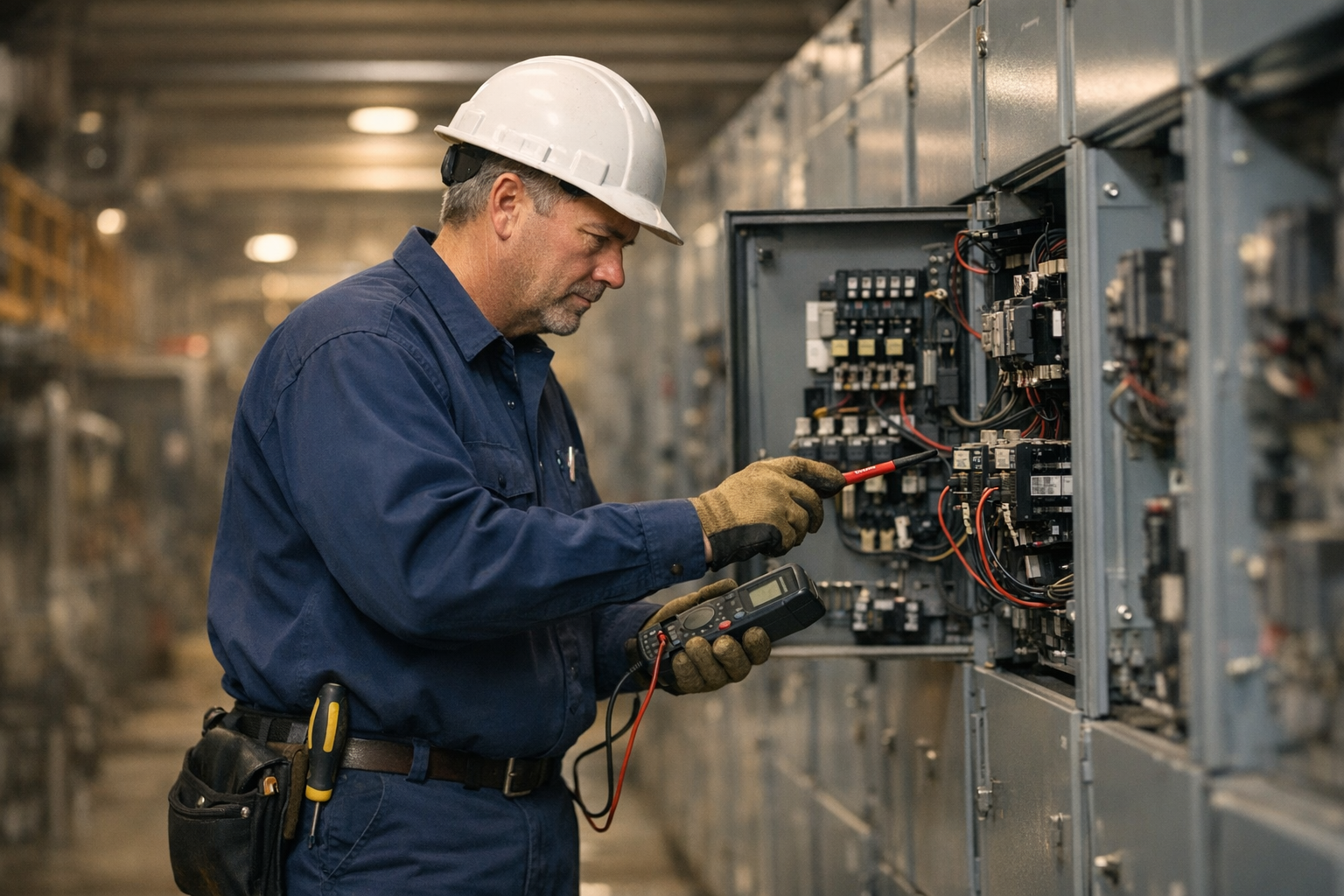
“Pennsylvania electrical M&A is structurally underrated. Sellers don’t realize that Pittsburgh-HQ’d Incline Equity, the public strategic acquirers (IES, MYR, EMCOR, APi), and the deep PE rollup pool combine to make Pennsylvania one of the strongest industrial electrical M&A markets in the country. The mistake is running a generic Philadelphia or Pittsburgh broker auction that misses the right buyers entirely. We’re a buy-side partner working with 76+ active buyers, including 14 with current Pennsylvania electrical mandates, the buyers pay us, not you, no contract required.”
TL;DR, the 90-second brief
- Pennsylvania electrical contractor M&A is one of the deepest industrial electrical markets in the country. Manufacturing legacy across Pittsburgh, Philadelphia, Allentown, Erie, and the I-78/I-81 corridor combined with Marcellus Shale natural gas activity, healthcare anchors, and emerging data center demand creates a deep buyer pool.
- Pennsylvania has NO state electrical contractor license, licensing is handled at the municipal level. Philadelphia, Pittsburgh, Erie, Allentown, Reading, Lancaster, and other major municipalities each have their own licensing requirements. This is a buyer-pool consideration: multi-municipality contractors require multiple licenses and Master Electricians.
- Pennsylvania’s 3.07% flat state income tax is moderate compared to coastal states, not a no-tax premium like Texas or Florida, but materially better than California (12.3-13.3%) or New Jersey (10.75%). The PA capital gains tax structure produces $200K-$700K differential on a $3-$10M sale versus coastal states.
- Realistic 2026 Pennsylvania electrical multiples. Sub-$2M revenue residential service: 0.5-1.0x revenue or 3-4.5x SDE. $1M-$3M EBITDA commercial/industrial platforms: 5.5-7x EBITDA. $3M+ EBITDA industrial/manufacturing specialists: 6.5-9x EBITDA. Union shops in Philadelphia and Pittsburgh face multiemployer pension withdrawal liability.
- Of our 76+ buyers, 14 actively bid on electrical contracting in Pennsylvania in 2024-2026. That includes Incline Equity Partners (Pittsburgh HQ, active electrical roll-ups), IES Holdings (NYSE: IESC), MYR Group (NASDAQ: MYRG), EMCOR Group (NYSE: EME), Comfort Systems USA (NYSE: FIX), APi Group (NYSE: APG), Sila Services Eastern, Crete United (Ridgemont Equity Partners), Audax Industrial, plus 5 regional Mid-Atlantic rollups. We’re a buy-side partner, the buyers pay us when a deal closes, not you. No retainer, no exclusivity, no contract.
Key Takeaways
- Pennsylvania electrical PE/strategic activity is deep: 14 of our 76+ buyers actively bid on PA electrical in 2024-2026, including Pittsburgh-HQ’d Incline Equity Partners, IES Holdings (NYSE: IESC), MYR Group (NASDAQ: MYRG), EMCOR (NYSE: EME), Comfort Systems USA (NYSE: FIX), APi Group, Sila Services Eastern, Crete United, Audax Industrial, plus 5 regional Mid-Atlantic rollups.
- Pennsylvania has NO state electrical contractor license, municipal licensing only. Philadelphia, Pittsburgh, Erie, Allentown, Reading, Lancaster each have separate requirements. Multi-municipality contractors require multiple licenses and Master Electricians.
- PA’s 3.07% flat state income tax is moderate, producing $200K-$700K differential on a $3-$10M sale versus coastal states (CA, NY, NJ, MA). Better than coastal but worse than no-tax states (TX, FL, NV, TN).
- PA electrical multiples by size and segment: sub-$2M revenue residential = 0.5-1.0x revenue / 3-4.5x SDE; $1M-$3M EBITDA commercial/industrial = 5.5-7x EBITDA; $3M+ EBITDA industrial specialists = 6.5-9x EBITDA. Marcellus Shale natural gas electrical commands premium.
- Multiemployer pension withdrawal liability under ERISA 4203/4204 is a serious diligence item for IBEW union shops in Philadelphia (Local 98) and Pittsburgh (Local 5). Liabilities range from $500K to $5M+ for typical PA union electrical contractors.
- Marcellus Shale natural gas activity in northern PA counties drives premium industrial electrical demand, specialty operators with documented oil & gas certifications and recurring service relationships command 6.5-9x EBITDA.
Why Pennsylvania electrical contractor M&A is structurally underrated
Pennsylvania electrical contractor M&A combines manufacturing legacy depth, healthcare anchor demand, Marcellus Shale industrial work, and emerging data center activity with a Pittsburgh-anchored PE ecosystem. The structural drivers create distinct sub-markets: residential service (driven by population stability and aging-housing-stock retrofit cycles in Philadelphia, Pittsburgh, and surrounding metros); commercial electrical (driven by office, retail, hospitality, and tenant fit-outs); industrial electrical (driven by manufacturing legacy across Pittsburgh metals, Philadelphia chemical, Allentown manufacturing, Erie GE/locomotive, and food processing); Marcellus Shale natural gas electrical (driven by drilling and processing activity in Lycoming, Bradford, Susquehanna, Tioga, and Washington counties); and healthcare electrical (driven by UPMC, Penn Medicine, Geisinger, Allegheny Health Network systems).
The active PE-backed and strategic Pennsylvania electrical buyers. Pittsburgh-HQ’d Incline Equity Partners is one of the most active PE acquirers of industrial services including electrical contractors in the Eastern US. Other PE platforms include Sila Services Eastern, Crete United (Ridgemont Equity Partners), Audax Industrial, and Wynnchurch Capital. Public strategic acquirers including IES Holdings (NYSE: IESC), MYR Group (NASDAQ: MYRG), EMCOR Group (NYSE: EME), Comfort Systems USA (NYSE: FIX), and APi Group (NYSE: APG) are highly active acquirers. Plus 5+ regional Mid-Atlantic-focused consolidators.
What this means for Pennsylvania electrical contractor sellers. If you’re running a $1M+ EBITDA commercial or industrial electrical contractor in Greater Pittsburgh, Greater Philadelphia, Allentown-Bethlehem, Erie, Harrisburg, or Marcellus Shale country, you should expect 5-9 indications of interest from a mix of PE-backed consolidators and public strategic buyers. Manufacturing-focused industrial electrical contractors with $1M+ EBITDA in Pittsburgh frequently see Incline Equity bids. Marcellus Shale natural gas electrical specialists clear premium multiples.
Why generic broker processes underprice Pennsylvania electrical specifically. A Philadelphia or Pittsburgh-based generic business broker who runs your $2M EBITDA industrial electrical contractor through a national auction will typically attract 4-5x EBITDA offers from generic rollups, missing Incline Equity, IES Holdings, MYR Group, and the Eastern PE platforms entirely. The same business positioned correctly to industrial-focused buyers can clear at 6-8x EBITDA.
Pennsylvania municipal electrical licensing: the no-state-license complication
Pennsylvania has NO state-level electrical contractor license. Unlike Texas (TDLR), Florida (DBPR), California (CSLB), or most other states, Pennsylvania does not maintain a centralized state electrical contractor license. Instead, electrical contractor licensing is handled at the municipal level. Philadelphia, Pittsburgh, Erie, Allentown, Reading, Lancaster, Harrisburg, Scranton, and most other major municipalities each maintain their own licensing requirements. Smaller boroughs and townships often defer to county or third-party inspector certifications.
What this means for multi-municipality electrical contractors. A Pennsylvania electrical contractor operating across multiple municipalities must hold separate licenses (or registered Master Electricians) in each municipality where work is performed. Philadelphia requires the License #PA-OO-#### Master Electrician registration through the Department of Licenses and Inspections. Pittsburgh requires Master Electrician licensure through the Bureau of Building Inspection. Each municipality has separate exam, experience, and fee requirements. This creates a buyer-pool consideration: PE rollups and public strategics generally prefer multi-municipality contractors because they have broader geographic reach, but the licensing complexity at integration creates diligence work.
Pennsylvania’s Home Improvement Consumer Protection Act (HICPA). The Pennsylvania Home Improvement Consumer Protection Act (HICPA, 73 P.S. Section 517.1 et seq.) requires registration with the Pennsylvania Attorney General’s office for contractors performing home improvement work over $5,000. While not a license per se, HICPA registration is required and lapses must be cured before sale. Buyers will check HICPA compliance during diligence.
How to handle PA municipal licensing 12-24 months before sale. Document all municipal licenses currently held with license numbers, Qualifier names, and renewal dates. Identify any municipalities where your business performs work without proper licensing (a common cleanup item). For multi-municipality operations, ensure backup Master Electricians are registered in key cities so the buyer isn’t dependent on you remaining post-close. Engage Pennsylvania construction counsel to review the licensing structure and identify any cleanup needed.
Why municipal licensing creates competitive moats. Multi-municipality Pennsylvania electrical contractors have meaningful competitive moats, new entrants must obtain licensing in each municipality separately, and the experience requirements (typically 4-7 years of journey-level work) limit the qualifying pool. Buyers value this because it’s defensible market position. Document your municipal licensing footprint clearly in the CIM as a competitive advantage.
Pennsylvania electrical segment dynamics: residential, commercial, industrial, Marcellus Shale, healthcare
Pennsylvania electrical M&A divides into five distinct segments with materially different buyer pools and multiples. Knowing which segment your business primarily serves is the most important positioning decision in the sale process. PA has unique segment depth in industrial/manufacturing electrical and Marcellus Shale natural gas electrical that other states don’t match.
Residential service electrical: 4-5.5x EBITDA platform / 3-4x SDE owner-op. Service calls, panel upgrades, EV charging installation, smart home work, residential remodels. Buyer pool: regional residential rollups (Sila Services Eastern), search funders, SBA individuals. PA residential demand is steady but slower-growing than Sun Belt states. Premium for shops with strong recurring maintenance program, presence in Greater Philadelphia, Greater Pittsburgh, or Lehigh Valley, and clean municipal licensing across multiple cities.
Commercial electrical: 5-6.5x EBITDA platform. Tenant fit-outs, retail buildouts, hospitality, office, healthcare facilities, light industrial. Buyer pool: Sila Services Eastern, Crete United, regional commercial rollups, public strategic acquirers (IES, EMCOR, Comfort Systems). Multiples typically 5-6.5x EBITDA at platform scale. Premium for shops with healthcare facility relationships (UPMC, Penn Medicine, Geisinger), recurring commercial maintenance, and tenant-improvement focus.
Industrial / manufacturing electrical: 6-8x EBITDA platform. Steel and metals manufacturing (Pittsburgh region: U.S. Steel, ATI, Allegheny Technologies), chemical (Philadelphia region, DuPont legacy operations), food processing (Hershey, Just Born, multiple statewide), aerospace components (Lycoming, Erie, Wilkes-Barre), automotive Tier 1/Tier 2 supply (statewide). Buyer pool: industrial-focused PE platforms (Incline Equity, Audax, Wynnchurch), public strategic acquirers (IES, MYR, EMCOR, APi). Multiples typically 6-8x EBITDA at platform scale. Premium for documented industrial customer relationships and recurring service contracts.
Marcellus Shale natural gas electrical: 6.5-9x EBITDA platform. Natural gas drilling and processing electrical work in Lycoming, Bradford, Susquehanna, Tioga, Washington, and Greene counties. Buyer pool: specialized industrial PE platforms, public strategic acquirers (IES Holdings has documented oil & gas electrical capability), and EPC partners. Multiples typically 6.5-9x EBITDA at platform scale, among the highest in PA electrical. Risk factors: natural gas price cyclicality, customer concentration on large operators (Range Resources, EQT, Cabot, Chesapeake), and turnaround-cycle revenue lumpiness.
Healthcare electrical: 6-7.5x EBITDA platform. UPMC system (Western PA), Penn Medicine (Eastern PA), Geisinger (Central PA), Allegheny Health Network (Western PA), Lehigh Valley Health Network. Healthcare electrical is high-margin recurring service work with strict regulatory compliance (NFPA 99, NFPA 70, OSHA). Buyer pool: specialty healthcare-focused PE platforms, public strategic acquirers. Premium for hospital facility relationships, healthcare-specific certifications, and recurring service contracts.
Who actually buys Pennsylvania electrical businesses in 2026: the five buyer archetypes
The Pennsylvania electrical buyer pool divides into five archetypes with materially different motivations and multiples. PA has a deeper PE buyer pool than most Mid-Atlantic states because of the Pittsburgh-anchored ecosystem (Incline Equity, plus other Pittsburgh PE) and the manufacturing-focused thesis that fits LMM industrial electrical.
Archetype 1: PE-backed Eastern/Mid-Atlantic electrical consolidators. Incline Equity Partners (Pittsburgh HQ) is one of the most active acquirers of industrial services including electrical contractors in the Eastern US, with multiple portfolio platforms. Sila Services Eastern, Crete United (Ridgemont Equity Partners), Audax Industrial, and Wynnchurch Capital pursue PA electrical. 5+ regional Mid-Atlantic-focused consolidators. Typical target: $1M-$10M EBITDA. Multiples: 5.5-8x EBITDA on platform-eligible deals. Cash + 15-30% rollover + earnout. Close timeline: 90-150 days.
Archetype 2: Public strategic acquirers (IES, MYR, EMCOR, Comfort Systems, APi). Same active acquirers as other states, with documented PA activity. Typical target: $2M-$20M EBITDA. Multiples: 6-9x EBITDA at platform scale. Close timeline: 90-180 days.
Archetype 3: Search funders pursuing PA commercial/industrial electrical. Individual MBA-backed searchers and deal-by-deal investors. PA is moderately popular for searchers given the deep manufacturing base. Typical target: $750K-$3M EBITDA. Multiples: 4.5-6.5x EBITDA. Close timeline: 120-180 days.
Archetype 4: SBA 7(a)-financed individuals. First-time owner-operators using SBA 7(a) program for residential service shops. Typical target: $200K-$700K SDE. Multiples: 2.5-4x SDE. Close timeline: 60-120 days.
Archetype 5: Family offices and strategic regional PA operators. Pittsburgh, Philadelphia, and Lehigh Valley family offices pursue mid-size electrical contractors. Strategic regional PA operators (often union shops in Philadelphia or Pittsburgh) expanding through acquisitions. Multiples: 4-7x EBITDA. Close timeline: 60-120 days.
| PA electrical buyer archetype | Typical multiple | Deal structure norms | Close timeline |
|---|---|---|---|
| PE rollup (Incline, Sila Eastern, Crete United, Audax) | 5.5-8x EBITDA | Cash + 15-30% rollover + earnout | 90-150 days |
| Public strategic (IES, MYR, EMCOR, FIX, APi) | 6-9x EBITDA | Cash-heavy, smaller rollover, earnout common | 90-180 days |
| Search funder | 4.5-6.5x EBITDA | Senior debt + 10-20% seller note + earnout | 120-180 days |
| SBA 7(a) individual (residential) | 2.5-4x SDE | 10% buyer equity, 20-30% seller note, training | 60-120 days |
| Family office / strategic PA regional | 4-7x EBITDA | Cash + 25-40% rollover for retention | 60-180 days |
Realistic Pennsylvania electrical multiples by size and segment
Pennsylvania electrical multiples vary by segment and metro within PA. Pittsburgh industrial multiples often run 0.25-0.5x EBITDA above Philadelphia commercial multiples for similar-size businesses because of the manufacturing thesis fit. Marcellus Shale natural gas electrical commands the highest multiples in PA when properly positioned.
Sub-$1M revenue residential service: 0.4-0.7x revenue / 2-3.5x SDE. Micro-shops sold primarily through PA business broker listings to SBA buyers. Multiples compress further if municipal licensing is dependent on the owner alone.
$1M-$3M revenue residential or light commercial: 0.5-1.0x revenue / 3-4.5x SDE. Core SBA buyer territory. Multiples improve with: (a) recurring service contracts; (b) tech-enabled dispatch; (c) commercial revenue at 30%+ of mix; (d) presence in Greater Philadelphia, Greater Pittsburgh, or Lehigh Valley; (e) multi-municipality licensing footprint.
$3M-$10M revenue / $500K-$2M EBITDA commercial/industrial: 5-7x EBITDA. Wider buyer pool: search funders, independent sponsors, regional PE add-ons (Incline, Sila Eastern, Crete United), public strategic interest. Multiples accelerate with industrial customer relationships and recurring service revenue.
$10M-$30M revenue / $2M-$5M EBITDA industrial/manufacturing: 6-8.5x EBITDA. Platform territory for PE rollups (especially Incline Equity for Pittsburgh-area industrial) and prime acquisition target for IES, MYR, EMCOR, Comfort Systems, APi.
$30M+ revenue / $5M+ EBITDA industrial/Marcellus/specialty: 7-10x EBITDA. Platform-of-the-platform deals. Strategic premium from public consolidators.
| PA electrical business profile | Revenue multiple range | SDE/EBITDA multiple range | Dominant buyer pool |
|---|---|---|---|
| Sub-$1M revenue residential | 0.4-0.7x revenue | 2-3.5x SDE | SBA individual |
| $1M-$3M revenue residential/commercial | 0.5-1.0x revenue | 3-4.5x SDE | SBA + search funder |
| $3M-$10M / $500K-$2M EBITDA | 0.7-1.2x revenue | 5-7x EBITDA | Search, indie sponsor, PE add-on, public strategic |
| $10M-$30M / $2M-$5M EBITDA | 0.8-1.4x revenue | 6-8.5x EBITDA | Incline, PE rollup, public strategic |
| $30M+ / $5M+ EBITDA industrial/Marcellus | 1.0-1.6x revenue | 7-10x EBITDA | Public strategic, PE platform-of-platform |
Pennsylvania state tax structure: 3.07% flat rate and after-tax math
Pennsylvania imposes a 3.07% flat state personal income tax on long-term capital gains. The PA tax structure is the lowest flat rate among non-zero-tax states. On a $5M business sale where the seller’s gain is primarily long-term capital, federal capital gains tax (15-20% plus 3.8% NIIT) applies and PA adds 3.07%. Compare this to California (12.3-13.3%), New York (10.9%), New Jersey (10.75%), or Massachusetts (5%). On a $5M gain, the PA seller keeps an additional $400K-$500K versus a California seller but $150K less than a Texas/Florida seller.
PA Local Earned Income Tax considerations. Pennsylvania municipalities and school districts impose Local Earned Income Tax (LEIT) typically 1-2% on top of the state rate. Capital gains on business sales are generally NOT subject to LEIT (LEIT applies to wages, not capital gains), but check with PA tax counsel for specific situations. Net effective state-level tax on a PA business sale capital gain remains roughly 3.07%.
PA Corporate Net Income Tax is being phased down. PA corporate net income tax was 9.99% historically but is being phased down to 4.99% by 2031 under Act 53 of 2022. For C-corporation sellers, this matters; for pass-through entity sellers (most PA electrical contractors are S-corps or LLCs), it’s irrelevant for sale taxation.
Asset allocation negotiation for PA sellers. In an asset sale, allocation between equipment (ordinary income recapture), inventory (ordinary income), goodwill (long-term capital gains), and non-compete (ordinary income) determines after-tax proceeds. PA’s moderate state tax rate means allocation matters but not as dramatically as in California or New York. Engage tax counsel for typical $50K-$300K of optimization on mid-size deals.
Union vs non-union dynamics in Pennsylvania electrical M&A: the multiemployer pension question
Pennsylvania has substantial IBEW union penetration in major metros, particularly Philadelphia and Pittsburgh. Key PA IBEW locals include Local 5 (Pittsburgh), Local 98 (Philadelphia), Local 380 (Norristown), Local 654 (Chester), Local 81 (Scranton), Local 743 (Reading), Local 743 (Lancaster), Local 16 (Erie), and others. Union penetration varies dramatically by metro: Philadelphia and Pittsburgh have very strong union presence on commercial and industrial work; smaller metros and rural areas trend toward open-shop. Industrial work in steel, manufacturing, and Marcellus Shale often involves union electricians.
Multiemployer pension withdrawal liability under ERISA Section 4203. Union electrical contractors participating in IBEW multiemployer pension plans (typically the National Electrical Benefit Fund or regional NEBF-affiliated plans) face withdrawal liability on sale, calculated based on the plan’s unfunded vested benefits and the contributing employer’s share. For a Pennsylvania industrial electrical contractor with significant union work history in Philadelphia or Pittsburgh, withdrawal liability can range from $500K to $5M+ depending on size and tenure.
The Section 4204 sale-of-assets exception. ERISA Section 4204 allows the buyer to assume the seller’s contribution obligation and avoid triggering withdrawal liability, but only if specific conditions are met: (1) the buyer must continue contributions to the plan at the same rate; (2) the buyer must post a bond or escrow equal to one year’s contributions for a 5-year period; (3) the seller’s liability remains contingent for 5 years; (4) the parties must comply with notice requirements. Most institutional buyers prefer the 4204 structure when buying union shops; sellers should engage ERISA counsel 12+ months pre-sale.
Non-union (open shop) PA electrical contractors enjoy a multiple premium. Buyers generally pay slightly higher multiples for non-union PA electrical contractors (0.25-0.75x EBITDA) because they avoid the multiemployer pension withdrawal liability complexity and have wider operational latitude. However, union contractors with strong Philadelphia or Pittsburgh industrial relationships often have customer relationships that non-union can’t replicate, some industrial customers explicitly require union contractors for project labor agreements.
How to position union shops for sale. Get a current actuarial valuation of withdrawal liability from the multiemployer pension plan 12+ months pre-sale. Engage ERISA counsel to structure the sale to qualify for Section 4204 sale-of-assets exception. Ensure all collective bargaining agreements have appropriate change-of-control language. Document customer relationships that depend on union status. With proper preparation, withdrawal liability becomes manageable rather than deal-killing.
Service mix and recurring revenue: the highest-leverage multiple driver in PA electrical
Recurring service revenue is the highest-leverage multiple driver in Pennsylvania electrical M&A. An electrical contractor with 30%+ of revenue from recurring service contracts (commercial property management agreements, multi-year industrial service contracts, healthcare facility service contracts, retail chain master service agreements) trades at a 0.5-1.0x EBITDA premium versus an otherwise identical project-only contractor. PA industrial customers (steel, chemical, manufacturing) value long-term electrical service relationships highly.
What PA electrical buyers value most. (1) Recurring service contract count and aggregate annual value, especially with industrial or healthcare customers; (2) master service agreements with major PA industrial operators or healthcare systems (UPMC, Penn Medicine, Geisinger); (3) service revenue percentage versus project revenue; (4) industrial customer concentration depth and relationship tenure; (5) multi-municipality licensing footprint; (6) electrician retention and tenure (PA electricians are skilled, scarce, and expensive); (7) Marcellus Shale relationships if applicable; (8) clean municipal licensing across all operating cities.
How to reposition mix in 18-24 months pre-sale. Aggressively grow recurring service contracts: pursue commercial property management agreements with PA REITs and commercial property managers; pursue industrial maintenance contracts with steel, manufacturing, chemical operators; pursue healthcare facility service contracts (UPMC, Penn Medicine, Geisinger); build out preventative electrical maintenance programs targeting industrial customers; develop Marcellus Shale recurring service relationships if in northern PA. Owners who execute this shift see their pre-sale PA multiple improve by 1-2x EBITDA.
What PA electrical buyers diligence: the checklist that determines your final price
Pennsylvania electrical diligence is consistent with national norms but with PA-specific overlays for municipal licensing, multiemployer pension liability, and HICPA registration. Buyers want to verify earnings (SDE/EBITDA quality), validate revenue mix and customer concentration, confirm electrician retention and productivity, validate municipal licensing across all operating cities, validate multiemployer pension withdrawal liability if union, evaluate HICPA compliance, and assess warranty exposure.
Earnings quality and add-back validation. 24-36 months of monthly P&Ls (longer for Marcellus Shale industrial contractors due to project-cycle revenue lumpiness). PA Department of Revenue filings matching financials. Documented add-backs. CPA-prepared annual financial statements. Bank reconciliations. AR aging. Job costing reports. WIP schedule. Backlog. PA-specific: PA sales/use tax compliance, PA corporate net income tax compliance (if C-corp).
Revenue mix, customer concentration, and PA-specific compliance. Service vs project breakdown. Recurring contract count, retention rate, annual value. Top 10 customers as percentage of revenue. Commercial vs industrial vs residential breakdown. Federal Davis-Bacon compliance for any federal projects. PA-specific: HICPA registration status, PA Prevailing Wage Act compliance for state/local public works projects (Pennsylvania Prevailing Wage Act, 43 P.S. Section 165-1 et seq.), municipal licensing documentation across all operating cities, IBEW union local participation if applicable.
Electrician headcount, productivity, retention, and municipal licensing. Electrician roster with tenure, comp, certifications (Master Electrician registration in each operating municipality, OSHA 30, NFPA 70E arc-flash, manufacturer certifications), W-2 vs 1099 status, I-9 documentation. Electrician retention rate over 24 months. Productivity metrics. PA-specific: municipal license documentation for each Master Electrician, IBEW local membership if applicable, NEBF participation status.
License, prevailing wage, insurance, and PA regulatory. Municipal Master Electrician licensing for all operating cities. HICPA registration. Pennsylvania Prevailing Wage Act compliance for any state/local public works projects. Federal Davis-Bacon compliance for federal projects. General liability and PA workers’ comp coverage status. PA Department of Labor & Industry compliance. Multiemployer pension plan participation disclosure with actuarial valuation if applicable.
The 18-24 month preparation playbook for Pennsylvania electrical sellers
Pennsylvania electrical contractors who do real 18-24 month preparation routinely sell for 1.5-3x EBITDA more than unprepared sellers. The structural risks (multi-municipality licensing dependency, multiemployer pension exposure for union shops, customer concentration, HICPA compliance, owner dependency) all take 12+ months to materially fix.
Months 24-18: financial cleanup and segment positioning. Move to monthly closes by the 15th. CPA-prepared financial statements. Job costing system. Document add-backs. Begin segment positioning. Address PA tax compliance and any open municipal licensing matters.
Months 18-12: licensing, customer diversification, multiemployer pension analysis. Document all municipal Master Electrician licenses with backup Qualifiers. Begin customer diversification if any single customer is above 25%. For union shops: get current actuarial valuation of multiemployer pension withdrawal liability and engage ERISA counsel for Section 4204 structuring. Resolve any open litigation, OSHA citations, or environmental matters. Confirm HICPA registration is current.
Months 12-6: reduce owner dependency. Identify what only you do. Document SOPs. Promote or hire general manager. Take 30-day extended absence 9 months before going to market. Build out second-tier management.
Months 6-0: data room, CIM, and buyer-pool targeting. Compile records. Build CIM emphasizing industrial specialty for Incline/IES/MYR/EMCOR, Marcellus for industrial-focused PE, healthcare for specialty platforms. Engage tax counsel for asset allocation.
PA electrical sale process timeline: what actually happens month by month
Pennsylvania electrical sale processes cluster around 7-10 months for sub-$1M EBITDA and 10-13 months for $1M+ platform deals. Industrial and Marcellus Shale timelines run longer because of customer-concentration and project-pipeline diligence.
Months 1-2: positioning and outreach. Build the CIM. Identify target buyer mix. Reach out to PE rollups (Incline Equity, Sila Eastern, Crete United, Audax), public strategics (IES, MYR, EMCOR, Comfort Systems USA, APi), search funders, family offices, SBA buyers.
Months 2-4: management meetings and IOIs. Take 4-8 buyer meetings. Receive 3-6 IOIs. Negotiate to single LOI.
Months 4-8: LOI, diligence, financing, licensing planning. Sign LOI with 60-90 day exclusivity. Buyer-side diligence: financial QoE; municipal licensing review; multiemployer pension withdrawal liability analysis if union; PA Prevailing Wage Act compliance review; Davis-Bacon compliance; HICPA review; environmental review.
Months 8-10: definitive agreement and close. Negotiate purchase agreement. Municipal license transfer filings. Final walkthrough. Employee/customer notification.
Months 10+: transition. Post-close transition 90-180 days. Earnout periods 12-36 months.
Sell Your Electrical Business in Other States: Sibling Guides
Sibling state guides for selling a electrical business. Each guide below covers state-specific licensing, multiple ranges, tax considerations, and named PE buyers active in that geography. If you operate in multiple states, the multi-state premium typically adds 0.5-1.5x to EBITDA multiple at exit (buyers value contiguous coverage).
State-by-state guides: Sell Your Electrical Business in Texas · Sell Your Electrical Business in Florida · Sell Your Electrical Business in California · Sell Your Electrical Business in New York · Sell Your Electrical Business in Illinois · Sell Your Electrical Business in Ohio · Sell Your Electrical Business in Georgia · Sell Your Electrical Business in North Carolina
For valuation context that applies regardless of state: See our electrical business valuation guide for nationwide multiple ranges and PE buyer pool. Run our free 90-second valuation calculator for a starting-point estimate. Or browse the full sell-your-business hub for all verticals and states.
Common mistakes Pennsylvania electrical sellers make (and how to avoid them)
Mistake 1: ignoring municipal licensing complexity until LOI. PA buyers walk when licensing complications surface mid-diligence. Document all municipal licenses 18-24 months in advance and ensure backup Qualifiers exist.
Mistake 2: ignoring multiemployer pension withdrawal liability for union shops. PA IBEW union shops face withdrawal liability of $500K-$5M+. Engage ERISA counsel 12+ months pre-sale for Section 4204 structuring.
Mistake 3: positioning as wrong segment. A $1.5M EBITDA Pittsburgh industrial electrical contractor positioned as residential gets 4-5x EBITDA. Positioned correctly as industrial: 6-8x EBITDA.
Mistake 4: ignoring Incline Equity Partners specifically. Pittsburgh-HQ’d Incline Equity is one of the most active PE acquirers of PA industrial electrical. Generic brokers don’t have this relationship. Missing Incline costs 1-2x EBITDA on Pittsburgh-area industrial deals.
Mistake 5: not addressing HICPA registration. HICPA lapses surface in diligence. Ensure registration current 12+ months pre-sale.
Mistake 6: under-investing in customer concentration diversification. Industrial PA contractors often have steel, manufacturing, or chemical customers above 30%. Diversify 18 months pre-sale.
Mistake 7: running generic broker auction. Targeted, relationship-led processes to Incline Equity, IES, MYR, EMCOR consistently produce 1-2x EBITDA more than generic auctions.
Selling a Pennsylvania electrical business? Talk to a buy-side partner who knows the buyers.
We’re a buy-side partner. Not a sell-side broker. We work directly with 76+ active buyers, including 14 with active Pennsylvania electrical mandates: Incline Equity Partners (Pittsburgh HQ), IES Holdings (NYSE: IESC), MYR Group (NASDAQ: MYRG), EMCOR Group (NYSE: EME), Comfort Systems USA (NYSE: FIX), APi Group (NYSE: APG), Sila Services Eastern, Crete United, Audax Industrial, plus 5 regional Mid-Atlantic rollups, who pay us when a deal closes. You pay nothing. No retainer, no exclusivity, no 12-month contract, no tail fee. We’re a buy-side partner working with 76+ active buyers… the buyers pay us, not you, no contract required.
Book a 15-Min CallCurious what your Pennsylvania electrical business would sell for?
A 15-minute confidential call gives you a real valuation range and tells you which buyers would compete for your business. No cost, no obligation, no pressure to sell.
Sell Your Electrical Business in Pennsylvania: 2026 Outlook and Key Takeaways
Selling an electrical business in Pennsylvania in 2026 is structurally underrated. PA combines manufacturing legacy depth, healthcare anchor demand, Marcellus Shale industrial work, and an active PE ecosystem (Pittsburgh-HQ’d Incline Equity, plus public strategics IES, MYR, EMCOR, Comfort Systems, APi, plus regional rollups). PA’s no-state-license / municipal-licensing structure creates competitive moats for established multi-municipality contractors. Address Master Electrician succession and HICPA compliance 18+ months in advance. For union shops in Philadelphia or Pittsburgh, engage ERISA counsel for Section 4204 multiemployer pension structuring. Realistic 2026 multiples: 2.5-4x SDE for sub-$1M residential service; 5-7x EBITDA for $1M-$3M commercial/industrial; 6-8x EBITDA for industrial/manufacturing; 6.5-9x EBITDA for Marcellus Shale specialists. Of our 76+ buyers, 14 actively bid on PA electrical contracting in 2024-2026.

About the Author
Christoph Totter is the founder of CT Acquisitions, a buy-side partner headquartered in Sheridan, Wyoming. We work directly with 100+ buyers, search funders, family offices, lower middle-market PE, and strategic consolidators, including direct mandates with the largest consolidators that other intermediaries cannot access. The buyers pay us when a deal closes, not the seller. No retainer, no exclusivity, no contract until close. Connect on LinkedIn · Get in touch
Sell Your Electrical Business in Pennsylvania: Frequently Asked Questions
How much is my electrical business in Pennsylvania worth?
Sub-$1M revenue residential service: 0.4-0.7x revenue or 2-3.5x SDE. $1M-$3M revenue residential/commercial: 0.5-1.0x revenue or 3-4.5x SDE. $3M-$10M revenue / $500K-$2M EBITDA commercial/industrial: 5-7x EBITDA. $10M-$30M / $2M-$5M EBITDA industrial/manufacturing: 6-8.5x EBITDA. $30M+ industrial/Marcellus specialty: 7-10x EBITDA.
Does Pennsylvania have a state electrical contractor license?
No. Pennsylvania does not maintain a state-level electrical contractor license. Licensing is handled at the municipal level. Philadelphia, Pittsburgh, Erie, Allentown, Reading, Lancaster, Harrisburg, Scranton, and most major municipalities each have their own requirements. Multi-municipality contractors require separate licenses in each operating city.
What is HICPA and does it affect my PA electrical business sale?
HICPA is the Pennsylvania Home Improvement Consumer Protection Act (73 P.S. Section 517.1 et seq.). Contractors performing home improvement work over $5,000 must register with the PA Attorney General. While not a license per se, HICPA registration must be current at sale and lapses must be cured. Buyers will check during diligence.
Who actually buys Pennsylvania electrical contractors in 2026?
Five archetypes: PE rollups (Pittsburgh-HQ’d Incline Equity Partners is highly active, plus Sila Services Eastern, Crete United, Audax Industrial, regional rollups); public strategics (IES Holdings NYSE: IESC, MYR Group NASDAQ: MYRG, EMCOR Group NYSE: EME, Comfort Systems USA NYSE: FIX, APi Group NYSE: APG); search funders pursuing $750K-$3M EBITDA; SBA 7(a)-financed individuals (residential); family offices and strategic regional PA operators. Of our 76+ buyers, 14 actively bid on PA electrical in 2024-2026.
How does multiemployer pension withdrawal liability work for PA IBEW union electrical contractors?
PA union shops in IBEW Locals 5 (Pittsburgh), 98 (Philadelphia), 380 (Norristown), 654 (Chester), and others face withdrawal liability under ERISA Section 4203 on sale, calculated based on the National Electrical Benefit Fund or regional NEBF-affiliated plan’s unfunded vested benefits. Liabilities range from $500K to $5M+. Section 4204 sale-of-assets exception requires careful structuring with ERISA counsel 12+ months pre-sale.
What about PA Prevailing Wage Act compliance?
Pennsylvania Prevailing Wage Act (43 P.S. Section 165-1 et seq.) applies to PA state and local public works projects above $25,000. Buyers will request 4 years of records, certified payroll, and any DLI investigation history. Federal Davis-Bacon applies separately to federal projects. Cleanup typically takes 60-180 days.
What’s the difference between residential, commercial, industrial, Marcellus Shale, and healthcare PA electrical multiples?
Residential service: 4-5.5x EBITDA platform / 3-4x SDE owner-op. Commercial: 5-6.5x EBITDA. Industrial/manufacturing: 6-8x EBITDA. Marcellus Shale natural gas: 6.5-9x EBITDA (highest). Healthcare: 6-7.5x EBITDA. Segment positioning is the highest-leverage decision in PA electrical M&A.
Why is Incline Equity Partners important for PA electrical sellers?
Incline Equity Partners is Pittsburgh-headquartered and one of the most active PE acquirers of industrial services including electrical contractors in the Eastern US. They have multiple electrical and industrial services portfolio platforms. For Pittsburgh-area or Western PA industrial electrical contractors at $1M+ EBITDA, Incline is often a primary target buyer.
How long does it take to sell an electrical business in Pennsylvania?
Sub-$1M EBITDA: 7-10 months from launch to close. $1M+ EBITDA platform deals: 10-13 months. Industrial and Marcellus Shale timelines run longer because of customer-concentration and project-pipeline diligence. Add 18-24 months on the front for proper preparation.
What’s the after-tax math for PA electrical sellers?
PA imposes a 3.07% flat state income tax on capital gains. On a $5M business sale, PA sellers keep $400K-$500K more than California sellers but $150K less than Texas/Florida sellers. PA Local Earned Income Tax generally doesn’t apply to capital gains. Net effective state-level tax remains roughly 3.07%, moderate but not premium.
Should I sell my PA electrical business to a public strategic or a PE rollup?
Public strategic acquirers (IES, MYR, EMCOR, Comfort Systems, APi) typically pay 6-9x EBITDA, mostly cash. PE rollups (Incline Equity, Sila Eastern, Crete United, Audax) typically pay 5.5-8x EBITDA at platform scale with cash + 15-30% rollover + earnout. Right answer depends on whether you want clean exit (public strategic) or continued involvement with rollover upside (PE rollup).
What recurring revenue mix do PA electrical buyers want?
30%+ recurring service revenue is the threshold where multiples step up by 0.5-1.0x EBITDA. Recurring revenue includes commercial property management agreements, healthcare facility service contracts (UPMC, Penn Medicine, Geisinger), industrial maintenance contracts with steel/chemical/manufacturing operators, and Marcellus Shale recurring service relationships.
How is CT Acquisitions different from a PA electrical broker or M&A advisor?
We’re a buy-side partner, not a sell-side broker. Sell-side brokers represent you and charge you 8-12% of the deal plus monthly retainers, run a 9-12 month auction, and require 12-month exclusivity. We work directly with 76+ buyers, including 14 with active Pennsylvania electrical mandates: Incline Equity Partners (Pittsburgh HQ), IES Holdings (NYSE: IESC), MYR Group (NASDAQ: MYRG), EMCOR Group (NYSE: EME), Comfort Systems USA (NYSE: FIX), APi Group (NYSE: APG), Sila Services Eastern, Crete United, Audax Industrial, plus 5 regional Mid-Atlantic rollups, who pay us when a deal closes. You pay nothing. No retainer, no exclusivity, no contract until a buyer is at the closing table. We move faster (60-120 days from intro to close) because we already know who the right buyer is.
Sources & References
All claims and figures in this analysis are sourced from the publicly available references below.
- https://www.dli.pa.gov/Businesses/Compensation/PrevailingWage/Pages/default.aspx
- https://www.attorneygeneral.gov/protect-yourself/home-improvement-consumer-protection/
- https://www.inclineequity.com/
- https://investors.ies-co.com/
- https://investors.myrgroup.com/
- https://investors.emcor.net/
- https://investors.comfortsystemsusa.com/
- https://www.pbgc.gov/prac/multiemployer
- Pennsylvania Department of State, licensing
- Pennsylvania Department of Revenue
- Pennsylvania Census QuickFacts
Related Guide: How to Sell an Electrical Contracting Business, The complete framework: licensing, multiples, buyer pools, prep timeline.
Related Guide: Electrical Business Valuation: SDE and EBITDA Multiples, How residential, commercial, and industrial electrical contractors are valued in 2026.
Related Guide: How to Sell an Industrial Electrical Contractor, Premium multiples in semiconductor, data center, and industrial electrical.
Related Guide: Sell Your Business in Pittsburgh, PA, Pittsburgh-HQ’d PE landscape including Incline Equity Partners.
Related Guide: 2026 LMM Buyer Demand Report, Aggregated buy-box data from 76 active U.S. lower middle market buyers.
Want a Specific Read on Your Business?
15 minutes, confidential, no contract, no cost. You leave with a read on your local buyer market and a likely valuation range.