Sell Your Electrical Business in Washington, 76+ Active PE Buyers, $0 Seller Fees
Quick Answer
Washington electrical contractors typically sell for 4.5x to 7x SDE to one of 12+ active buyers including IES Holdings, MYR Group, EMCOR Group, and regional rollups, with strength in tech, aerospace, and data center segments offsetting Washington’s 7% capital gains tax above $270K. Most deals in the $1M to $50M revenue range close in 18-24 months, and sellers pay no advisory fees in the buyer-paid acquisition model used by CT Acquisitions and similar advisors.
Thinking about selling your electrical business in Washington?
A 15-minute confidential call gives you a real valuation range and the Washington buyers most likely to compete for your business. No cost, no obligation.
Christoph Totter · Managing Partner, CT Acquisitions
20+ home services M&A transactions across HVAC, plumbing, pest control, roofing · Updated May 7, 2026
Selling an electrical contracting business in Washington in 2026 sits at the intersection of strong tech, aerospace, and data center demand and a state tax environment that’s changed materially with the 2022 capital gains tax. Washington electrical M&A combines Seattle tech (Amazon HQ, Microsoft Redmond HQ, Google Seattle, Meta Seattle, plus dense tech corridor), Boeing aerospace (Everett 787, Renton 737, plus Boeing supply chain across the state), Quincy / Moses Lake data center alley (one of the largest data center markets in the world, Microsoft, Yahoo, Amazon, Vantage, Sabey, T5, NTT all have major operations), Hanford nuclear cleanup (DOE’s largest cleanup project), Port of Seattle logistics, and healthcare anchors (UW Medical, Providence, Swedish, MultiCare).
This guide is for Washington electrical contractor owners running between $1M and $50M of revenue. We’ll walk through Washington Department of Labor & Industries (LNI) Electrical Contractor licensing under RCW 19.28, the after-tax math at WA’s 7% capital gains tax above $270K threshold, segment dynamics across residential, commercial, Seattle tech, Boeing aerospace, Quincy/Moses Lake data center, Hanford, and the 18-24 month preparation playbook.
The framework draws on direct work with 76+ active U.S. lower middle market buyers, including major Western and WA-active acquirers. We’re a buy-side partner. The buyers pay us when a deal closes, not you. Of our 76+ buyers, 12 actively bid on Washington electrical in 2024-2026: IES Holdings (NYSE: IESC), MYR Group (NASDAQ: MYRG), EMCOR Group (NYSE: EME), Comfort Systems USA (NYSE: FIX), APi Group (NYSE: APG), Sila Services West, Bernhard Capital Partners, Wynnchurch Capital, plus 4 regional Western / Pacific Northwest rollups.
One realistic note before you start. Washington electrical has structural strength in tech, aerospace, and data center that almost no other state can match in combination. Quincy / Moses Lake alone is one of the largest data center markets in the world. The right WA electrical contractor in the right segment can clear premium multiples that beat most Western state comparables.
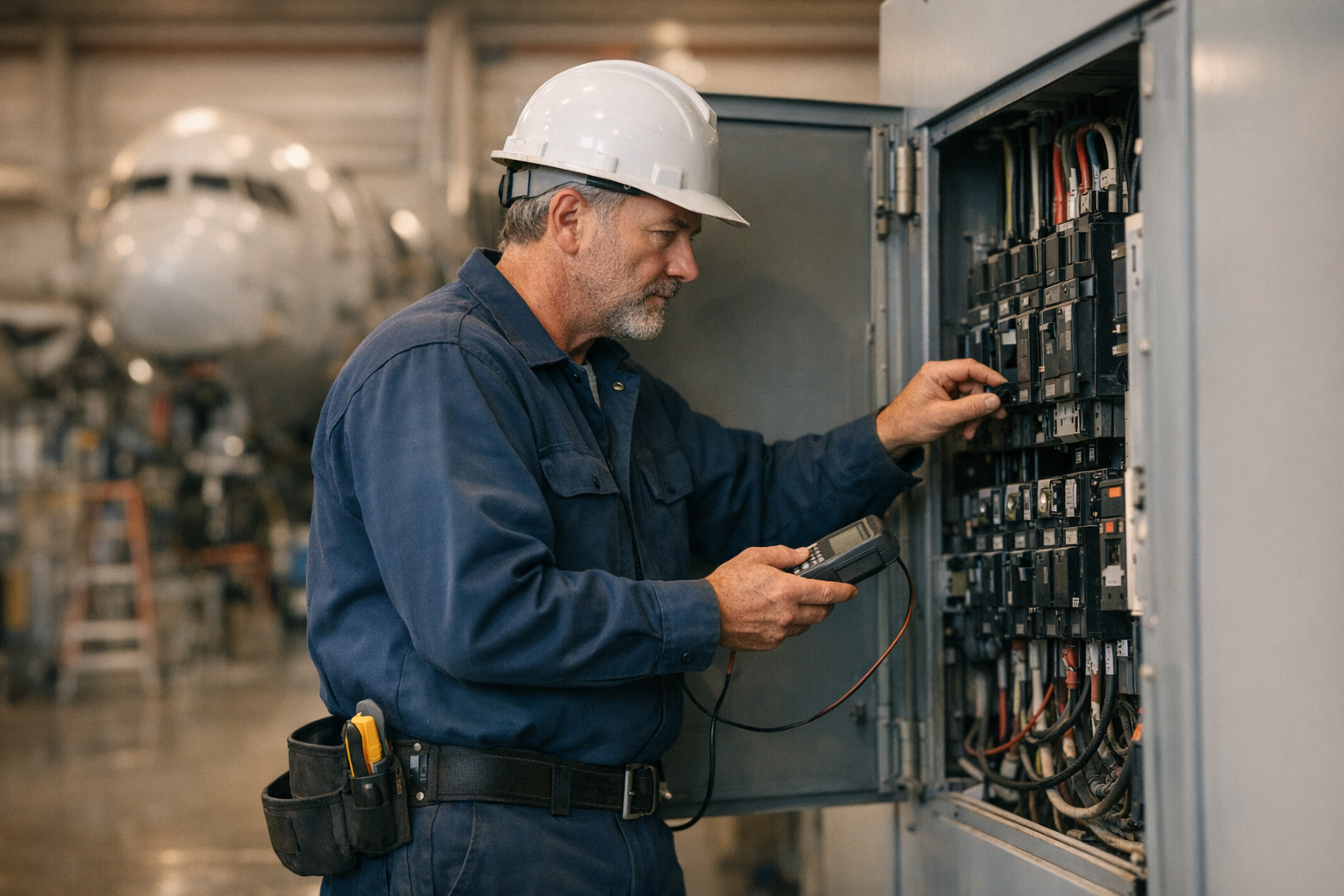
“Washington electrical M&A is one of the most overlooked Pacific Northwest opportunities. Seattle tech demand from Amazon and Microsoft, Boeing Everett and Renton aerospace work, Quincy/Moses Lake data center alley (one of the largest data center markets in the world), and Hanford nuclear cleanup all combine to create premium opportunities for the right operators. We’re a buy-side partner working with 76+ active buyers, including 12 with current Washington electrical mandates, the buyers pay us, not you, no contract required.”
TL;DR, the 90-second brief
- Washington electrical contractor M&A is one of the strongest Pacific Northwest electrical markets. Seattle tech (Amazon, Microsoft, Google, Meta), Boeing aerospace (Everett, Renton, plus Boeing supply chain), Quincy / Moses Lake data center buildouts (Microsoft, Yahoo, Amazon, Vantage, Sabey, T5, NTT), Hanford nuclear cleanup, and Port of Seattle logistics.
- Washington has zero state personal income tax. However, WA imposes a 7% capital gains tax on long-term capital gains above $270K (2026 threshold) under RCW 82.87. On a $5M gain, WA sellers face roughly 7% state tax above the threshold.
- WA Department of Labor & Industries (LNI) administers electrical contractor licensing under RCW 19.28. General Electrical Contractor (01) and Specialty (02-08) license categories. Administrator Electrician is required and personal, license does NOT transfer with the entity.
- Realistic 2026 Washington electrical multiples. Sub-$2M revenue residential service: 0.5-1.0x revenue or 3-4.5x SDE. $1M-$3M EBITDA commercial/industrial platforms: 5.5-7x EBITDA. $3M+ EBITDA Seattle tech / Boeing aerospace / Quincy data center specialists: 6.5-9x EBITDA.
- Of our 76+ buyers, 12 actively bid on electrical contracting in Washington in 2024-2026. That includes IES Holdings (NYSE: IESC), MYR Group (NASDAQ: MYRG), EMCOR Group (NYSE: EME), Comfort Systems USA (NYSE: FIX), APi Group (NYSE: APG), Sila Services West, Bernhard Capital Partners, Wynnchurch Capital, plus 4 regional Western / Pacific Northwest rollups. We’re a buy-side partner, the buyers pay us when a deal closes, not you. No retainer, no exclusivity, no contract.
Key Takeaways
- Washington electrical PE/strategic activity: 12 of our 76+ buyers actively bid on WA electrical in 2024-2026, including IES Holdings (NYSE: IESC), MYR Group (NASDAQ: MYRG), EMCOR (NYSE: EME), Comfort Systems USA (NYSE: FIX), APi Group, Sila Services West, Bernhard Capital, Wynnchurch Capital, plus 4 regional Western / Pacific Northwest rollups.
- WA Department of Labor & Industries (LNI) administers electrical contractor licensing under RCW 19.28. General Electrical Contractor (01) and Specialty (02-08) categories. Administrator Electrician is required and personal, license does NOT transfer with the entity.
- Washington has zero state personal income tax but imposes a 7% capital gains tax on long-term capital gains above $270K (2026 threshold) under RCW 82.87. On a $5M gain, WA sellers face roughly 7% state tax above the threshold, better than CA/NY but worse than TX/FL.
- WA electrical multiples by size and segment: sub-$2M revenue residential = 0.5-1.0x revenue / 3-4.5x SDE; $1M-$3M EBITDA commercial/industrial = 5.5-7x EBITDA; $3M+ EBITDA Seattle tech / Boeing / Quincy data center specialists = 6.5-9x EBITDA.
- Quincy / Moses Lake data center alley is one of the largest data center markets in the world. Microsoft, Yahoo, Amazon, Vantage, Sabey, T5, NTT all have major operations. Specialty electrical contractors clear 7-10x EBITDA.
- Multiemployer pension withdrawal liability under ERISA 4203/4204 is a serious diligence item for IBEW Local 46 (Seattle) and Local 191 (Tacoma) union shops. $500K-$5M+ exposure typical.
Why Washington electrical contractor M&A is one of the strongest Pacific Northwest markets
WA electrical contractor M&A combines Seattle tech, Boeing aerospace, Quincy/Moses Lake data center alley, Hanford nuclear, and Port of Seattle logistics. Seattle tech (Amazon HQ, Microsoft Redmond HQ, one of the largest tech HQ concentrations in the U.S.) drives sustained tech facility electrical demand. Boeing aerospace (Everett 787 plant, Renton 737 plant, Auburn, plus deep supply chain) creates premium aerospace electrical demand. Quincy / Moses Lake data center alley is one of the largest data center markets in the world, Microsoft Quincy (multiple facilities), Yahoo Quincy, Amazon AWS, Vantage Quincy, Sabey Quincy, T5 Quincy, NTT Quincy, plus continuing buildout in Moses Lake and Wenatchee. Hanford nuclear cleanup is the DOE’s largest cleanup project (multi-decade project).
Active PE-backed and strategic Washington electrical buyers. IES Holdings (NYSE: IESC), MYR Group (NASDAQ: MYRG), EMCOR Group (NYSE: EME), Comfort Systems USA (NYSE: FIX), APi Group (NYSE: APG) are all active. PE platforms include Sila Services West, Bernhard Capital Partners, Wynnchurch Capital. Plus 4 regional Western / Pacific Northwest consolidators.
What this means for WA electrical contractor sellers. If you’re running a $1M+ EBITDA commercial, industrial, or specialty electrical contractor in Seattle metro, Tacoma, Bellevue, Quincy / Moses Lake, or the Tri-Cities, you should expect 4-8 IOIs. Seattle tech, Boeing aerospace, Quincy data center, or Hanford specialty contractors clear premium multiples.
Washington LNI Electrical Contractor licensing under RCW 19.28
Washington electrical contractor licensing is administered by the Department of Labor & Industries (LNI) under RCW 19.28. WA has General Electrical Contractor (01) and Specialty (02-08) license categories. Each requires an Administrator Electrician (who has passed the LNI exam and meets experience requirements) employed by the contractor. License is personal.
What this means in a sale: the Administrator Electrician is personal. License stays with the entity in a stock sale (subject to LNI notification). Administrator Electrician is personal. Buyers handle this three ways: designate an existing licensed employee, hire a qualifying party, or have you remain employed for 6-24 months.
How to handle WA LNI licensing 12-24 months before sale. Identify a senior electrician with appropriate experience. Support through LNI Administrator Electrician exam. Once you have a second Administrator on staff, your buyer pool widens dramatically.
WA LNI enforcement and complaint history. Buyers will pull the LNI licensee record. Resolve any open matters before going to market.
Washington electrical segment dynamics: residential, commercial, Seattle tech, Boeing aerospace, Quincy/Moses Lake data center, Hanford
WA electrical M&A divides into six distinct segments. Quincy / Moses Lake data center, Boeing aerospace, and Seattle tech are the premium specialties.
Residential service electrical: 4-5.5x EBITDA platform / 3-4.5x SDE owner-op. Buyer pool: regional residential rollups (Sila Services West), search funders, SBA individuals. Premium for shops in Seattle metro, Bellevue, Tacoma.
Commercial electrical: 5-6.5x EBITDA platform. Tenant fit-outs, retail, hospitality, office, healthcare facilities. Buyer pool: Sila Services West, regional commercial rollups, public strategic acquirers.
Seattle tech electrical: 6-7.5x EBITDA platform. Amazon HQ campuses, Microsoft Redmond, Google Seattle, Meta Seattle, plus dense Seattle tech corridor. Specialty work includes tech campus electrical, R&D facility MEP. Buyer pool: specialty tech-focused PE, public strategic acquirers.
Boeing aerospace electrical: 6.5-8.5x EBITDA platform. Boeing Everett (787 production), Renton (737), Auburn, plus deep Boeing supply chain across WA. Specialty work includes aerospace manufacturing electrical, Tier 1/2 supplier electrical, classified facility electrical. Buyer pool: industrial-focused PE, public strategic acquirers.
Quincy / Moses Lake data center electrical: 7-10x EBITDA platform, the highest segment. Quincy is one of the largest data center markets in the world. Microsoft Quincy (multiple facilities), Yahoo Quincy, Amazon AWS, Vantage Quincy, Sabey Quincy, T5 Quincy, NTT Quincy. Plus continuing buildout in Moses Lake and Wenatchee. Buyer pool: specialized data center electrical platforms, IES Holdings, PE platforms with infrastructure focus. Multiples typically 7-10x EBITDA at platform scale.
Hanford nuclear electrical: 6.5-8.5x EBITDA platform. DOE Hanford Site nuclear cleanup is the largest cleanup project in U.S. history. Multi-decade project. Specialty work includes nuclear-rated electrical systems, classified facility electrical, radiological work. Buyer pool: federal contractor PE platforms, specialty industrial PE.
Selling a Washington electrical business? Talk to a buy-side partner who knows the buyers.
We’re a buy-side partner. Not a sell-side broker. We work directly with 76+ active buyers, including 12 with active Washington electrical mandates: IES Holdings (NYSE: IESC), MYR Group (NASDAQ: MYRG), EMCOR Group (NYSE: EME), Comfort Systems USA (NYSE: FIX), APi Group (NYSE: APG), Sila Services West, Bernhard Capital Partners, Wynnchurch Capital, plus 4 regional Western / Pacific Northwest rollups, who pay us when a deal closes. You pay nothing. No retainer, no exclusivity, no 12-month contract, no tail fee.
Book a 15-Min CallWho actually buys Washington electrical businesses in 2026
The WA electrical buyer pool divides into five archetypes. WA has a deeper specialty buyer pool than most Western states because of Quincy data center activity and Boeing aerospace.
Archetype 1: Public strategic acquirers (IES, MYR, EMCOR, Comfort Systems, APi). All highly active in WA. Typical target: $2M-$20M EBITDA. Multiples: 6-9x EBITDA at platform scale (7-10x for Quincy data center / Boeing aerospace). Close timeline: 90-180 days.
Archetype 2: PE-backed Western / Pacific Northwest electrical consolidators. Sila Services West, Bernhard Capital Partners, Wynnchurch Capital. Plus 4 regional Western / Pacific Northwest consolidators. Typical target: $1M-$10M EBITDA. Multiples: 5.5-8x EBITDA.
Archetype 3: Search funders pursuing WA commercial/industrial electrical. Pacific Northwest is moderately popular for search funders. Typical target: $750K-$3M EBITDA. Multiples: 4.5-6.5x EBITDA.
Archetype 4: SBA 7(a) individuals. Targeting residential service shops. Typical target: $200K-$700K SDE. Multiples: 2.5-4x SDE.
Archetype 5: Family offices and strategic regional WA operators. Seattle and Bellevue family offices pursue mid-size electrical contractors. Multiples: 4-7x EBITDA.
| WA electrical buyer archetype | Typical multiple | Deal structure norms | Close timeline |
|---|---|---|---|
| Public strategic (IES, MYR, EMCOR, FIX, APi) | 6-9x EBITDA (7-10x Quincy/Boeing) | Cash-heavy | 90-180 days |
| PE rollup (Sila West, Bernhard, Wynnchurch) | 5.5-8x EBITDA | Cash + 15-30% rollover + earnout | 90-150 days |
| Search funder | 4.5-6.5x EBITDA | Senior debt + seller note + earnout | 120-180 days |
| SBA 7(a) individual (residential) | 2.5-4x SDE | 10% buyer equity, 20-30% seller note | 60-120 days |
| Family office / strategic WA regional | 4-7x EBITDA | Cash + 25-40% rollover | 60-180 days |
Realistic Washington electrical multiples by size and segment
WA electrical multiples vary dramatically by segment. Quincy data center commands the highest, followed by Boeing aerospace and Seattle tech.
Sub-$1M revenue residential service: 0.4-0.7x revenue / 2.5-3.5x SDE. Micro-shops sold to SBA buyers.
$1M-$3M revenue residential or light commercial: 0.5-1.0x revenue / 3-4.5x SDE. Core SBA buyer territory.
$3M-$10M revenue / $500K-$2M EBITDA commercial/industrial: 5-7x EBITDA. Wider buyer pool. Multiples accelerate with Seattle tech, Boeing aerospace, or Quincy data center adjacency.
$10M-$30M revenue / $2M-$5M EBITDA industrial/commercial: 6-8.5x EBITDA. Platform territory.
$30M+ revenue / $5M+ EBITDA Quincy data center / Boeing / Seattle tech / Hanford: 7-10x EBITDA. Platform-of-the-platform deals.
| WA electrical business profile | Revenue multiple range | SDE/EBITDA multiple range | Dominant buyer pool |
|---|---|---|---|
| Sub-$1M revenue residential | 0.4-0.7x revenue | 2.5-3.5x SDE | SBA individual |
| $1M-$3M revenue residential/commercial | 0.5-1.0x revenue | 3-4.5x SDE | SBA + search funder |
| $3M-$10M / $500K-$2M EBITDA | 0.7-1.2x revenue | 5-7x EBITDA | Search, indie sponsor, PE add-on, public strategic |
| $10M-$30M / $2M-$5M EBITDA | 0.8-1.4x revenue | 6-8.5x EBITDA | PE rollup, public strategic |
| $30M+ / $5M+ EBITDA Quincy data center / Boeing / Seattle tech | 1.0-1.6x revenue | 7-10x EBITDA | Public strategic, PE platform-of-platform |
Washington capital gains tax: the after-tax math sellers must understand
Washington has zero state personal income tax, but in 2022 enacted a 7% capital gains tax on long-term capital gains above the threshold under RCW 82.87. The 2026 threshold is $270K of long-term capital gains. On a $5M business sale primarily comprised of long-term capital gains, WA imposes 7% on the portion above $270K = roughly $330K of state tax. Compare to California (12.3-13.3%), New York (10.9%), Texas/Florida (0%). WA is better than coastal states but materially worse than zero-tax states for sellers above the threshold.
Exemptions and exclusions under RCW 82.87. Sales of qualified small businesses (under $10M EBITDA, with specific gross-receipts and worker requirements) may qualify for an exemption. Sales of family-owned businesses with continuing family ownership may qualify. Engage tax counsel to evaluate eligibility 12+ months pre-sale.
WA Business & Occupation (B&O) tax during operations. WA imposes B&O tax on gross receipts during operations. B&O doesn’t directly tax the gain on sale but compliance must be current for change-of-control filings.
Asset allocation for WA sellers. Engage tax counsel to optimize allocation given the 7% capital gains tax. Typical $50K-$300K of optimization on mid-size deals.
Quincy / Moses Lake data center alley: WA’s premium segment
Quincy / Moses Lake / Wenatchee data center alley is one of the largest data center markets in the world. Hydroelectric power from the Columbia River makes Quincy one of the cheapest electricity markets in the U.S., attracting hyperscalers since the late 2000s. Microsoft Quincy (multiple facilities representing one of Microsoft’s largest data center concentrations), Yahoo Quincy, Amazon AWS Quincy, Vantage Quincy, Sabey Quincy, T5 Quincy, NTT Quincy. Plus continuing buildout in Moses Lake and Wenatchee.
What documented Quincy / Moses Lake data center work commands. Electrical contractors with documented hyperscale data center experience in Quincy / Moses Lake clear 7-10x EBITDA at platform scale. Premium for direct hyperscale operator relationships and recurring construction pipeline visibility.
Boeing aerospace as a parallel premium specialty. Boeing Everett 787 production, Renton 737 production, Auburn, plus deep Boeing supply chain. Boeing aerospace electrical contractors with documented commercial aerospace experience clear 6.5-8.5x EBITDA premium.
Service mix and recurring revenue in WA electrical
Recurring service revenue is the highest-leverage multiple driver in WA electrical M&A. 30%+ recurring service revenue trades at 0.5-1.0x EBITDA premium. WA-specific recurring opportunities: Quincy data center service contracts, Boeing facility maintenance, Seattle tech campus service contracts (Amazon, Microsoft, Google, Meta), healthcare facility service (UW Medical, Providence, Swedish, MultiCare).
What WA electrical buyers value most. Recurring data center / aerospace / tech / healthcare contracts; specialty certifications (cleanroom, data center MEP, NFPA 70E, manufacturer); electrician retention; LNI Administrator Electrician depth.
How to reposition mix in 18-24 months pre-sale. Aggressively grow recurring contracts. Returns 1-2x EBITDA in higher offers.
What WA electrical buyers diligence: the checklist
WA electrical diligence is consistent with national norms with WA-specific overlays. Standard diligence plus LNI licensing, Quincy / Boeing / Seattle tech customer verification, WA capital gains tax compliance.
Earnings quality and add-back validation. 24-36 months of P&Ls. WA Department of Revenue B&O tax filings. CPA-prepared statements.
Revenue mix, customer concentration, federal compliance. Service vs project breakdown. Quincy data center, Boeing, Amazon, Microsoft customer concentration disclosure. Federal Davis-Bacon for federal projects (JBLM Joint Base Lewis-McChord, Hanford DOE, NAS Whidbey Island).
Electrician headcount, productivity, retention, LNI licensing. Electrician roster. WA-specific: LNI Administrator Electrician documentation, individual electrician licensing.
License, prevailing wage, insurance, WA regulatory. LNI Electrical Contractor and Administrator Electrician licenses. WA workers’ comp (LNI). WA Prevailing Wage Act (RCW 39.12) for state/local public works. Federal Davis-Bacon. Multiemployer pension if union (IBEW Local 46 Seattle, Local 191 Tacoma, Local 76 Tacoma, Local 112 Tri-Cities).
The 18-24 month preparation playbook for WA electrical sellers
WA electrical contractors who do real 18-24 month preparation routinely sell for 1.5-3x EBITDA more. Standard playbook applies.
Months 24-18: financial cleanup and segment positioning. Move to monthly closes. CPA-prepared statements. Document add-backs. Begin segment positioning.
Months 18-12: LNI licensing, customer diversification, segment documentation. Identify a senior electrician for LNI Administrator Electrician succession. Diversify customer concentration. Document Quincy data center, Boeing, Seattle tech, or Hanford work specifically.
Months 12-6: reduce owner dependency. Document SOPs. Promote/hire general manager.
Months 6-0: data room, CIM, buyer-pool targeting. Compile records. Build CIM emphasizing Quincy data center for IES, Boeing aerospace for industrial PE / public strategics, Seattle tech for specialty platforms. Engage tax counsel for WA capital gains tax optimization.
WA electrical sale process timeline
WA electrical sale processes run 7-10 months for sub-$1M EBITDA and 10-13 months for $1M+ platform deals. Quincy data center and Boeing-adjacent deals can run longer because of customer relationship verification.
Months 1-2: positioning and outreach. Reach out to public strategics (IES, MYR, EMCOR, Comfort Systems USA, APi), PE rollups (Sila West, Bernhard, Wynnchurch), search funders, SBA buyers, family offices.
Months 2-4: management meetings and IOIs. Take 4-7 buyer meetings. 3-5 IOIs.
Months 4-8: LOI, diligence, financing, LNI planning. Sign LOI. Buyer-side diligence: financial QoE; LNI Administrator Electrician license review; Quincy data center / Boeing / Seattle tech customer verification; Davis-Bacon for federal projects; multiemployer pension if union.
Months 8-10: definitive agreement and close. Negotiate purchase agreement. LNI change-of-control filings.
Months 10+: transition. Post-close transition 90-180 days. Earnout periods 12-36 months.
Sell Your Electrical Business in Other States: Sibling Guides
Sibling state guides for selling a electrical business. Each guide below covers state-specific licensing, multiple ranges, tax considerations, and named PE buyers active in that geography. If you operate in multiple states, the multi-state premium typically adds 0.5-1.5x to EBITDA multiple at exit (buyers value contiguous coverage).
State-by-state guides: Sell Your Electrical Business in Texas · Sell Your Electrical Business in Florida · Sell Your Electrical Business in California · Sell Your Electrical Business in New York · Sell Your Electrical Business in Pennsylvania · Sell Your Electrical Business in Illinois · Sell Your Electrical Business in Ohio · Sell Your Electrical Business in Georgia
For valuation context that applies regardless of state: See our electrical business valuation guide for nationwide multiple ranges and PE buyer pool. Run our free 90-second valuation calculator for a starting-point estimate. Or browse the full sell-your-business hub for all verticals and states.
Common mistakes WA electrical sellers make
Mistake 1: ignoring LNI Administrator Electrician succession until LOI. Address 18-24 months pre-sale.
Mistake 2: not documenting Quincy / Moses Lake data center work specifically. Quincy data center work commands 7-10x EBITDA. Document specific projects, hyperscale relationships.
Mistake 3: positioning as wrong segment. A Boeing or Quincy-adjacent contractor positioned as residential gets 4-5x EBITDA. Positioned correctly: 7-9x EBITDA.
Mistake 4: ignoring WA 7% capital gains tax planning. Engage tax counsel 12+ months pre-sale to evaluate qualified-small-business or family-business exemptions under RCW 82.87.
Mistake 5: ignoring multiemployer pension withdrawal liability for union shops. Seattle (IBEW Local 46) and Tacoma (Local 191, 76) union shops face withdrawal liability of $500K-$5M+. Engage ERISA counsel 12+ months pre-sale.
Mistake 6: not addressing Davis-Bacon for WA federal projects. JBLM Joint Base Lewis-McChord, Hanford DOE, NAS Whidbey Island. Federal compliance must be airtight.
Mistake 7: running generic WA broker auction. Targeted, relationship-led processes consistently produce 1-2x EBITDA more.
Curious what your Washington electrical business would sell for?
A 15-minute confidential call gives you a real valuation range and tells you which buyers would compete for your business. No cost, no obligation, no pressure to sell.
Sell Your Electrical Business in Washington: 2026 Outlook and Key Takeaways
Selling an electrical business in Washington in 2026 is one of the strongest Pacific Northwest electrical M&A opportunities. Seattle tech demand (Amazon, Microsoft, Google, Meta), Boeing aerospace (Everett 787, Renton 737, plus supply chain), Quincy / Moses Lake data center alley (one of the largest data center markets in the world), Hanford nuclear cleanup, and Port of Seattle logistics all combine to create premium opportunities for the right operators. Address LNI Administrator Electrician succession 18+ months pre-sale. Document Quincy data center, Boeing aerospace, or Seattle tech work specifically. WA’s 7% capital gains tax above $270K threshold requires advance tax planning, engage tax counsel 12+ months pre-sale to evaluate exemptions under RCW 82.87. Realistic 2026 multiples: 2.5-4x SDE for sub-$1M residential; 5-7x EBITDA for $1M-$3M commercial/industrial; 6-8x EBITDA for industrial; 6.5-8.5x EBITDA for Boeing aerospace; 6-7.5x EBITDA for Seattle tech; 7-10x EBITDA for Quincy/Moses Lake data center specialists. Of our 76+ buyers, 12 actively bid on WA electrical contracting in 2024-2026.

About the Author
Christoph Totter is the founder of CT Acquisitions, a buy-side partner headquartered in Sheridan, Wyoming. We work directly with 100+ buyers, search funders, family offices, lower middle-market PE, and strategic consolidators, including direct mandates with the largest consolidators that other intermediaries cannot access. The buyers pay us when a deal closes, not the seller. No retainer, no exclusivity, no contract until close. Connect on LinkedIn · Get in touch
Sell Your Electrical Business in Washington: Frequently Asked Questions
How much is my electrical business in Washington worth?
Sub-$1M revenue residential: 0.4-0.7x revenue or 2.5-3.5x SDE. $1M-$3M: 0.5-1.0x revenue or 3-4.5x SDE. $3M-$10M / $500K-$2M EBITDA: 5-7x EBITDA. $10M-$30M / $2M-$5M EBITDA: 6-8.5x EBITDA. $30M+ Quincy data center / Boeing / Seattle tech: 7-10x EBITDA.
How does Washington LNI Electrical Contractor license transfer?
LNI Electrical Contractor license under RCW 19.28 stays with the entity in a stock sale (subject to LNI notification). Administrator Electrician is personal and does NOT transfer. Buyers handle this three ways: designate an existing licensed employee, have a buyer’s qualifying party pass the LNI exam, or seller remains as Administrator Electrician for 6-24 months. Address 18-24 months pre-sale.
What about Washington’s 7% capital gains tax?
Washington has zero state personal income tax but enacted a 7% capital gains tax in 2022 (RCW 82.87) on long-term capital gains above $270K threshold (2026). On a $5M gain, WA sellers face roughly 7% state tax above the threshold. Engage tax counsel 12+ months pre-sale to evaluate qualified-small-business or family-business exemptions.
Why are Washington electrical multiples competitive?
Seattle tech demand (Amazon HQ, Microsoft Redmond, Google Seattle, Meta Seattle), Boeing aerospace (Everett 787, Renton 737, plus supply chain), Quincy / Moses Lake data center alley (one of the largest data center markets in the world, Microsoft, Yahoo, Amazon, Vantage, Sabey, T5, NTT), Hanford nuclear cleanup, and Port of Seattle logistics all combine to drive premium multiple opportunities.
Who actually buys Washington electrical contractors in 2026?
Five archetypes: public strategics (IES Holdings NYSE: IESC, MYR Group NASDAQ: MYRG, EMCOR Group NYSE: EME, Comfort Systems USA NYSE: FIX, APi Group NYSE: APG); PE rollups (Sila Services West, Bernhard Capital Partners, Wynnchurch Capital, regional Western / Pacific Northwest rollups); search funders; SBA 7(a) individuals; family offices and strategic regional WA operators. Of our 76+ buyers, 12 actively bid on WA electrical in 2024-2026.
What about Quincy / Moses Lake data center electrical specifically?
Quincy / Moses Lake / Wenatchee data center alley is one of the largest data center markets in the world. Hydroelectric power from the Columbia River makes it one of the cheapest electricity markets in the U.S. Microsoft Quincy (multiple facilities), Yahoo Quincy, Amazon AWS, Vantage, Sabey, T5, NTT all have major operations. Documented hyperscale work commands 7-10x EBITDA premium.
What about Boeing aerospace electrical?
Boeing Everett (787 production), Renton (737 production), Auburn, plus deep Boeing supply chain across Washington. Specialty work includes aerospace manufacturing electrical, Tier 1/2 supplier electrical, classified facility electrical. Documented work commands 6.5-8.5x EBITDA premium.
What’s the difference between residential, commercial, Seattle tech, Boeing aerospace, Quincy data center, and Hanford WA electrical multiples?
Residential: 4-5.5x EBITDA / 3-4.5x SDE. Commercial: 5-6.5x EBITDA. Seattle tech: 6-7.5x EBITDA. Boeing aerospace: 6.5-8.5x EBITDA. Quincy / Moses Lake data center: 7-10x EBITDA (highest). Hanford nuclear: 6.5-8.5x EBITDA.
How long does it take to sell an electrical business in WA?
Sub-$1M EBITDA: 7-10 months. $1M+ EBITDA platform deals: 10-13 months. Quincy data center and Boeing-adjacent deals can run longer because of customer relationship verification.
What about union dynamics for WA electrical contractors?
WA has substantial IBEW union penetration in major metros. IBEW Local 46 (Seattle), Local 191 (Tacoma), Local 76 (Tacoma), Local 112 (Tri-Cities). Union shops most common on commercial and large industrial work. Open-shop dominates residential and most light commercial. Multiemployer pension withdrawal liability under ERISA Section 4203 applies for union shops.
Should I sell my WA electrical business to a public strategic or a PE rollup?
Public strategics (IES, MYR, EMCOR, Comfort Systems, APi) typically pay 6-9x EBITDA (7-10x for Quincy data center / Boeing), mostly cash. PE rollups (Sila West, Bernhard, Wynnchurch) typically pay 5.5-8x EBITDA at platform scale with cash + 15-30% rollover + earnout.
What recurring revenue mix do WA electrical buyers want?
30%+ recurring service revenue is the threshold where multiples step up by 0.5-1.0x EBITDA. WA-specific recurring opportunities: Quincy / Moses Lake data center service contracts (Microsoft, Yahoo, Amazon, Vantage, Sabey, T5, NTT), Boeing facility maintenance, Seattle tech campus service contracts (Amazon, Microsoft, Google, Meta), healthcare facility service (UW Medical, Providence, Swedish, MultiCare).
How is CT Acquisitions different from a WA electrical broker?
We’re a buy-side partner, not a sell-side broker. Sell-side brokers represent you and charge 8-12% of the deal plus retainers, run 9-12 month auctions, require 12-month exclusivity. We work directly with 76+ buyers, including 12 with active Washington electrical mandates: IES Holdings (NYSE: IESC), MYR Group (NASDAQ: MYRG), EMCOR Group (NYSE: EME), Comfort Systems USA (NYSE: FIX), APi Group (NYSE: APG), Sila Services West, Bernhard Capital Partners, Wynnchurch Capital, plus 4 regional Western / Pacific Northwest rollups, who pay us when a deal closes. You pay nothing. No retainer, no exclusivity, no contract until a buyer is at the closing table. We move faster (60-120 days from intro to close) because we already know who the right buyer is.
Sources & References
All claims and figures in this analysis are sourced from the publicly available references below.
- https://lni.wa.gov/licensing-permits/electrical/
- https://dor.wa.gov/
- https://app.leg.wa.gov/RCW/default.aspx?cite=82.87
- https://investors.ies-co.com/
- https://investors.myrgroup.com/
- https://investors.emcor.net/
- https://investors.comfortsystemsusa.com/
- https://www.dol.gov/agencies/whd/government-contracts/construction
- Washington Department of Labor & Industries, contractors
- Washington Census QuickFacts
Related Guide: How to Sell an Electrical Contracting Business, The complete framework: licensing, multiples, buyer pools, prep timeline.
Related Guide: Electrical Business Valuation: SDE and EBITDA Multiples, How residential, commercial, and industrial electrical contractors are valued in 2026.
Related Guide: How to Sell an Industrial Electrical Contractor, Premium multiples in semiconductor, data center, aerospace, and oil & gas electrical.
Related Guide: Sell Your Electrical Business in California, Adjacent West Coast electrical market with biotech and aerospace demand.
Related Guide: 2026 LMM Buyer Demand Report, Aggregated buy-box data from 76 active U.S. lower middle market buyers.
Want a Specific Read on Your Business?
15 minutes, confidential, no contract, no cost. You leave with a read on your local buyer market and a likely valuation range.